Friday, April 3, 2009

Iowa Supremes To Rule On Gay Marriage?

Today's installment of FAD is brought to you by the Iowa Supreme Court. Based out of Des Moines (Motto: "We're Des Bestes!"), the Iowa Supremes are preparing to rule on the constitutionality of one couple's gay marriage.

The fact pattern is pretty interesting:

Lambda Legal sued challenging the state's ban on gay marriage on behalf of 6 couples. The trial court struck down the statute prohibiting gay marriage. One of the couples from the Lambda Legal group applied for their marriage license and received it on that same day. The trial court then reversed itself and stayed its decision on the following day.

The issue (per the AP wire article): The high court would determine whether the district court erred by finding that the same-sex marriage ban violated the state constitution, and whether it erred by not allowing the county's expert witness testimony.

[Ed. Note 1: I tried to get on to the Iowa Supremes' site and it just doesn't connect. I wonder why the servers are acting a little queer... **crickets chirping** I'll be here all week!

Ed. Note 2: But, seriously, the Iowa Supremes' site is down; it might be best to wait until the AP/Reuters breaks the story for the nail-biting conclusion]

Arbitration and the Enforceability of International Judgments

While I was doing some legal research for a pro bono project, I came across an interesting issue that (admittedly) I know little about. In the United States, the Full Faith and Credit Clause typically places a strong presumption in favor of the enforceability of judgments between the individual states. See Fauntleroy v. Lum, 210 U.S. 230 (1908). In the international arbitration context, however, the same principle on respecting foreign judgments has been somewhat different. Specifically, U.S. courts have sometimes refused to recognize valid judgments rendered by foreign nations.

Though U.S. courts are not bound to do so under the Full Faith and Credit Clause, there are associated treaty obligations; specifically, contracting States to the New York Convention (to which the United States is a party) “[must] recognize [foreign] arbitral awards as binding and enforce them in accordance with the rules of procedure of the territory where the award is relied upon.” However, the “[r]ecognition and enforcement of the award may be refused, at the request of the party against whom it is invoked . . . if that party furnishes . . . proof that” the arbitration award, as rendered, falls under one of the grounds for refusal under Article V of the Convention. See Convention on the Recognition and Enforcement of Foreign Arbitral Awards ("New York Convention"), 9 U.S.C. § 201, et seq. One such ground for refusal under Article V(1)(e) is where the state in which the arbitration took place vacates the award of the final judgment.

Thus, if a party gets an arbitration award in Country A, and attempts to enforce it in Country B, Country B must honor the award unless Country A sets it aside (in which case it should not honor the award).

But U.S. courts have not always complied. In Chromalloy Aeroservices v. Egyptian Arab Republic, 939 F. Supp. 907 (D.D.C. 1996), for example, the court was faced with a peculiar set of facts which required it to assess this principle in light of conflicting public policies between two nations. In that case, the plaintiff entered into a contract with the defendant to “provide parts, maintenance, and repair for helicopters belonging to the Egyptian Air Force." Id. at 908. The plaintiff alleged that the defendant later terminated the agreement unlawfully, and thus commenced arbitration proceedings in Egypt pursuant to an arbitration clause in the contract. Id. After the proceedings, the arbitration panel entered an award for the plaintiff, which the plaintiff subsequently sought to enforce in the United States District Court for the District of Columbia. However, shortly after the plaintiff's enforcement action commenced, the defendant obtained an order from the Egypt Court of Appeal, nullifying the award on the grounds that the arbitrator in the case applied incorrect law to the dispute--notwithstanding the fact that the parties had agreed not to seek judicial review of any award. Id. Accordingly, Egypt argued that the District Court should refuse enforcement out of deference to the Egyptian court under Article V(1)(e) of the Convention. Id.

The Court declined Egypt's request because, as it reasoned, the conduct of the Egyptian court in vacating the award strongly cut against U.S. policy favoring arbitration, and thus, should not be respected. Id. at 915. Other courts have recognized this limited policy-based exception to Article V(1)(e), while openly questioning its application in situations presenting different factual circumstances than Chromalloy. See, e.g., Termorio S.A. E.S.P. v. Electrificadora Del Atlantico S.A. E.S.P., 421 F. Supp. 2d 87 (D.D.C. 2006) (recognizing the exception, but limiting it to the facts of Chromalloy).

The distinction between U.S policy on the pro-enforceability of judgments between (U.S.) states and this limited exception recognized by some U.S. courts with respect to foreign states is quite interesting. And I'm not sure the difference can be reconciled solely by reference to the requirements imposed by the Full Faith and Credit clause and New York Convention treaty obligations, respectively. I look forward to hearing any feedback or thoughts on this from our readers.

Thursday, April 2, 2009

More Grade Drama: Should We "Fine" Tardy Professors?

My answer would be a (somewhat) emphatic "no." But The Shark brought to light some interesting commentary we hadn't seen in preparing our earlier discussion of the 100-day grade debacle.

Apparently, Florida State University recently began fining professors who turned grades in late. As the article explains, Florida State seems to be the only institution to fine professors for turning in late grades, and charges a $10 fine "for every grade for every student that is not runed in by [the] deadline[.]"

Interesting. As I expressed in my earlier posting, I do believe law schools would benefit from rigid deadlines, but this really does seem over-the-top--not to mention the potential legal problems associated with a punitive approach of this kind. Professors, like students, have things come up that need tending to...delays are obviously not ideal, but are a very necessary reality for those who have other important obligations to tend to.

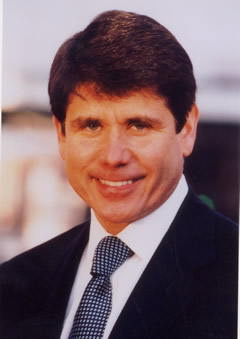
Blagojevich indicted!

As BBL's chief Midwest correspondent, it is my duty to inform you all of the following: Ex-Gov Blagojevich has been formally indicted.

Good Luck Taking Notes From This...

Follow the link to see Law School, circa 1920s-30s.

And, don't you worry Josh: I'll draft a creative, thoughtful response to your rebuttal yet, my pretty! I'll get you, and your little democracy, too!

Wednesday, April 1, 2009

No Grades after 100 Days: April Fools?

My initial reaction after reading this article on Sua Sponte was that I was being had. But the story's apparently true, and really rather unfortunate. As the anonymous 1L at The George Washington University Law School explains:

As many people know, 1L Section 13 has yet to receive its grade in Criminal Law from the fall semester, taught by Dean Lawrence. This doesn’t affect just the section — it affects all 1Ls because with that grade outstanding, no one knows their class ranking/scholar designation.

Wow. Though I'm not sure what the date of this final was, I do know that GW's last 1L final was on 12/18. So, at best, it's been about 104 days. Having suffered through the wait for my own 1L fall grades, and the ensuing job search that depended so heavily on said grades, I can only imagine what these 1Ls are feeling. And I'm sure this isn't easy for Dean Lawrence either--he's a great professor who cares a great deal about his students, so I'd expect he feels badly about the delay.

While I've never waited quite this long to get my exam grade back (1.5 months is the longest so far), I've often wondered why professors routinely take as long as they do in the grading process. I respect that the process is time consuming if done correctly, cf. Other Methods, but does it really need to take more than three weeks? I imagine the answer varies by type of exam, but--either way--I think the turnaround would improve immeasurably if law schools imposed real, rigid deadlines on their faculty. And if my hunch is right, I have to wonder why this hasn't been done yet. Students, after all, have to successfully juggle multiple obligations--sometimes even mandatory pro bono work--with tight deadlines. Why do our professors get an exemption with respect to grading?

------

UPDATE (Apr. 2, 4:35 PM): Given the array of e-mails and interest this story has generated, we wanted to provide a brief update. We have not been able to get in touch with Dean Lawrence personally, but are now able to confirm that the Dean's Office and Registrar expect the grade to be released on Monday, April 6. I hope this news helps quell the anxiety of at least some of our anxious GW readers.

------

UPDATE (Apr. 2, 4:51 PM): We were able to get in touch with GW's Associate Dean for Academic Affairs, Dean Gregory Maggs, and he shed some new light on the story. Although he did not confirm the April 6 date we heard from other contacts at the Dean's Office and Registrar's office, he did say that the grades would be coming in "soon." Moreover, he provided several explanations for the delay--the Dean has been out of the country several times this semester raising money for the school, and has been involved in various other (pressing) professional functions. Dean Maggs expressed sympathy to the students, and noted that the Dean was doing his best to facilitate as quick a turnaround as possible. This confirms our earlier hunch that there was, in fact, a good reason (in fact, several) for the delay.

Update: Death Penalty Standards Are Not "Evolving"

On March 19, Nima discussed New Mexico's repeal of the death penalty. The repeal, as he intimated, could "open up new avenues to the Supreme Court for death row inmates to argue against the constitutionality of the death penalty. . . .[because] other states follow New Mexico's lead in banning capital punishment altogether[.]" Given the majoritarian "evolving standards" jurisprudence, see Trop v. Dulles, 356 U.S. 86, 101 (1958), I thought Nima's suggestion was well-taken.

But it doesn't seem like any type of national consensus against the death penalty is really emerging. As LawDork reports, "Ohio Attorney General Rich Cordray is going in the other direction." According to Cordray, "it's a bogus argument to say the death penalty should be eliminated because cases take too long and cost too much."

That's pretty powerful language. Granted, as LawDork notes, the Attorney General's role is to defend the law of the state--regardless of what his or her views are. But I nevertheless think this reaction is interesting in light of the previous discussion, as it highlights the fact that our country may not be ready to reverse it's death penalty course . . . yet.

The Clapper's End Is Nigh!!

Remote Control...in your BRAIN!!

Was Our Nation Founded On Democracy?

Jeff, our ever-present provocateur, made the following statement in the comments section of my InTrade post:

"The simple fact of the matter is that this country was founded on the principle of democracy...If you want to live in a big brother society where the people at the top decide everything, then move to Venuezula or Iran. Here, the people get to decide..."

Not only is that utterly false-- it is also hilariously ironic. Both Venezuela and Iran utilize democracy. For all their faults, both nations follow the democratic pattern advocated by Jeff. And, the end result for both nations has been tyranny.

The following are just some of the evidence CONTRARY TO the proposition that our country was founded on democracy or that democracy was it's central purpose:

Bicameralism
Federalism
Length of term limits
Term-limits (for the President)
Requirements for A1 & A2
Life-time tenure for A3 Judges
Electoral College
The Entire Bill of Rights (1-10)
Article 5 (Amendment Process)
Reconstruction Amendments (13-15)

Liberty (which should NEVER be considered synonymous with democracy) was this nation's "central purpose" or "foundational idea." The Framers believed in natural rights and wanted to create a national bulwark to thwart the tyranny of the majority where necessary.

[Ed. Note: The picture is from StateNet, a site I found while looking for a picture of a ballot box with a gun barrel sticking out of it.]

Tuesday, March 31, 2009

Law student writes a novel

We've received word from a tipster at the University of Pennsylvania Law School that a fellow student (we'll keep it confidential) has spent the majority of this school year writing . . . a novel. The novel apparently incorporates the student's classmate-friends into the story line and is replete with other interesting details. This is not the first time a law student has taken time to write a novel while in law school.

I came across an article in the Winston-Salem Journal about a student at Wake Forest University Law School, who spent the better part of her 3L year writing her first novel, The Killing Tree. How did she have time for classes and other law school activities, you ask? The article notes that "her husband . . . also in law school, took notes for both of them." She could never really get into it. As she noted:
I knew that I had this desire to write, but once you're in it and you're in the system and you're doing well in classes, it didn't make sense for me to quit then. . . . There are some classes and some cases that are wonderful, and they're reasons people become lawyers in the first place. But the day-to-day grind of learning civil procedure and things like that, it was dry, and I just think naturally I'm a creative person, and I felt a void. I felt something missing.
Following graduation and a few months of private practice, she decided to write on a full time basis. Regarding this decision, she said:
I had the bones of The Killing Tree and I had already felt what it feels like to do something I loved, and so I had that contrast there, and then I had a baby, too, and so everything just came together and made it an easier choice than it would have been.
Fair enough. With the bad economy, and the upcoming fall recruitment prospects dwindling, I guess students need to find ways to adapt. And if that means that more students will utilize their creative abilities, it could only end up being for the best.

Proposition 8's Demise Refuted on InTrade??

I thought this was kind of interesting given the previous postings about Prop. 8. InTrade, for those not familiar, is kind of a glorified online bookie that allows people to bet on the potential outcomes of particular issues of interest. It's kind of a cool, counter-intuitive barometer of what people really think.

Price for California Supreme Court and Proposition 8 at intrade.com

People Must've Taken Crazy Pills Today!

Oh, yeah, Craig? You dare challenge the Bastiat Monopoly on Ridiculous Legal-Related Articles of the Day? I'll see your breach of contract for failing to impregnate and raise it one DUI.

Lawyer-Writer For Playboy Sues For Harassment

I would've put up some sort of logo, but I'd hate to see what would happen if I searched 'playboy' on Google. Anyway, here's the article of the day!

Musings on Pro Bono Work

After my first "musings" post, I thought it would be nice to, well, muse every now and again about other items on my mind. And recently, "the" item on my mind has been pro bono--not necessarily because I've also fallen victim to the Good Samaritan Effect. Rather, my school requires that I complete 35 hours of pro bono by year's end. So here I am thinking about viable (sorry, Justices Scalia/Blackmun!) pro bono opportunities and, fortuitously, I see the message Jim Luce--contributor to the Huffington Post and founder of Orphans International--left in a comment to my Good Samaritan Effect posting, encouraging lawyers to take on more pro bono work. This really got me thinking. But now I'll stop stalling, and tell you where I'm going with this.

At first I was quite ambivalent to the mandatory 35 hours of pro bono a year (starting with the 2L year) that my law school requires each student to complete in order to graduate. Law school is a lot of work as it is, and if anything, I thought that this "mandate" would simply sour my perspective on pro bono work in general. I thought, why not make it optional? At least that way the work would feel more rewarding in that it was my own choice to do it if I so desired.

I must say that these initial apprehensions were wrong. I have found the work to be both intellectually challenging and very rewarding, and I do not think that I would have otherwise seriously considered taking it on had it not been for my school's requirement. Indeed, it is all too probable that I would have simply put it off out of the fear that my grades could have suffered if I had spread myself too thinly. I believe this is precisely one of the principal issues with which many students and practitioners are concerned.

I have resolved my own ambivalence toward mandatory pro bono work, but, as noted, I appreciate that lawyers do work in a variety of capacities, and often are quite preoccupied with numerous pressing matters--ostensibly more so than law students. In this vein, I think it can fairly be said that the prospect of taking on more work in general--be it pro bono or otherwise--does sometimes seem daunting. Nevertheless, I think it is at least worth considering (musing, if you prefer) the benefits of taking on pro bono work at least periodically throughout your career along with your other general responsibilities, notwithstanding the added inconvenience of the extra workload. Many practitioners with whom I have spoken find the work extremely rewarding; and from my own limited (albeit required) experience with it, I have as well.

Just some thoughts . . .

------

In the interest of full disclosure, the "Finding Nima" logo was created by one of my good friends during my undergraduate years for an entirely different purpose. I think it fits well with the "musings" concept, however. If you disagree, feel free to comment or e-mail me. :)

Monday, March 30, 2009

What the Reasonable Man Would Bill

Members of the BBL posse: Today, I announce the creation of a new feature-- "Fred's Article of the Day."

Today's article is from Law.com and it cites an interesting trend followed by some SPs and smaller firms in their billing practices. I encourage any interested to check out the article here.

The Merits of Student Scholarship

Having just finished writing my student comment, I have had a lot of free time to ponder what’s next for my article—the product of five months of sustained effort. If it’s selected for publication, great…but it might not be, and I realize (and accept) that.

I ran a Google search on what students who have their work turned away do, and came across this link. The blog discussion is nearly three years old, but the points made are increasingly relevant and—surprisingly—not as frequently discussed as one would expect.

The question, as Professor Desai puts it, is whether student-written scholarship should “R.I.P. or Survive on SSRN.” Noting that rejected student pieces are rarely accepted for publication in other journals, Professor Desai explains that students can nevertheless post their rejected articles on SSRN—a scholarly research network which allows authors to upload their work for the public’s unfettered access. Of course, as he sees it, the arguments on whether students should (be able to?) do so cut both ways:
On one hand, the amount of information (some good and some perhaps not so good) would increase but I could see arguments about too much noise or information overload being raised. Then again, one already has to wade through volumes of information using search strings and the like so perhaps adding more narrow but hopefully well done pieces to that pool will allow scholars to focus on large implications of their research and use the increased access to notes as a way to more efficiently see what work has been done on a particular topic that is a footnote or small part of the scholar's work
I think Professor Desai makes some good points, and I can appreciate that there are information overload concerns associated with opening the "floodgates" to student comments on scholarly databases such as SSRN. On the other hand, such arguments seem to presuppose that student work—at least that of the “not so good” variety—contributes nothing to the discourse. I have several reactions to this.

First, I think even bad scholarship (whatever that means) could contribute something to legal academia. Even if it is only the research put forth by the authors that could be expanded upon, and improved.

Second, it seems that the same argument could also be made with respect to published pieces written by students and academics alike. Students, after all, are the ones who choose legal academia’s direction by determining what to publish as Journal editors, and there are 918 journals to publish in along with a corresponding pressure to publish…surely not every published work is a masterpiece. I’ve heard rumblings of a push for peer review, but any such movement is—for now, anyway—an unrealized ideal.

Finally, in light of my second point, I have to wonder why professors would not want to see what the next generation of lawyers is writing about. Given that we make the publication decisions on their work, shouldn’t they want to see what we care about? What inspires us? Moreover, couldn’t reading our scholarship forge a better classroom environment since professors would be attuned to our interests?

I hate to generalize, but far more of my professors than I would like have seemed very detached from their pupils, and utterly opposed to learning from us; this is unfortunate. Academic discourse, like the Socratic method, works best when there’s a two-way dialogue—that is, when the “floodgates” are open. Why is there such resistance?

Friday, March 27, 2009

The Greatest 3 minutes and 44 Seconds In TV History?

Click here for: Margaritaville, South Park 3/3

If you want to see the entire episode: Click Here

What's Liberty Got To Do With It (With It, With It)?

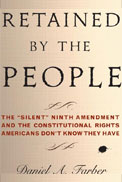
Pop quiz Hot-Shots! What does the following mean? What substantive demarcations can be made so as to give the following addressable standards?

The enumeration in the Constitution, of certain rights, shall not be construed to deny or disparage others retained by the people.

A practical approach to law school? Arthur Miller thinks so . . .

Last month, I wrote an article advocating a "Medical Based Approach" to legal education.  Today, I came across an interesting YouTube clip featuring NYU Law Professor and noted civil procedure scholar Arthur Miller discussing what he opines is a "great disservice" law schools are doing their students these days.  Specifically, he recognizes that, today more than ever in his career, there exists the largest disconnect between the "practicing branch" and the "academic branch" of the legal profession.  

With forceful language, he notes (and I think correctly) that "less attention is being devoted to the skill set for the practicing lawyer"--particularly with respect to legal research and writing.  Why?  "The answer, in part, is that some of . . . [law school's most] basic subjects have simply gotten crowded out by making more academic time available for things that didn't even exist when [he] was . . . a young academic."  The practicing lawyers, who account for roughly 90% of law school graduates, he suggests, are not getting the "skill set development . . . they used to, and part of that skill set is research . . . and its first cousin, writing."

Here is the full video.  If you like, take a look at my post before watching.  Enjoy.